Chris Kamman, Outdoor and Documentary Filmmaker
"I hope creativity becomes more valued because of it, because so many people will rely on AI. So, when someone can pull off something very creative and unique, hopefully that's valued a lot more." CXM Interview - 002

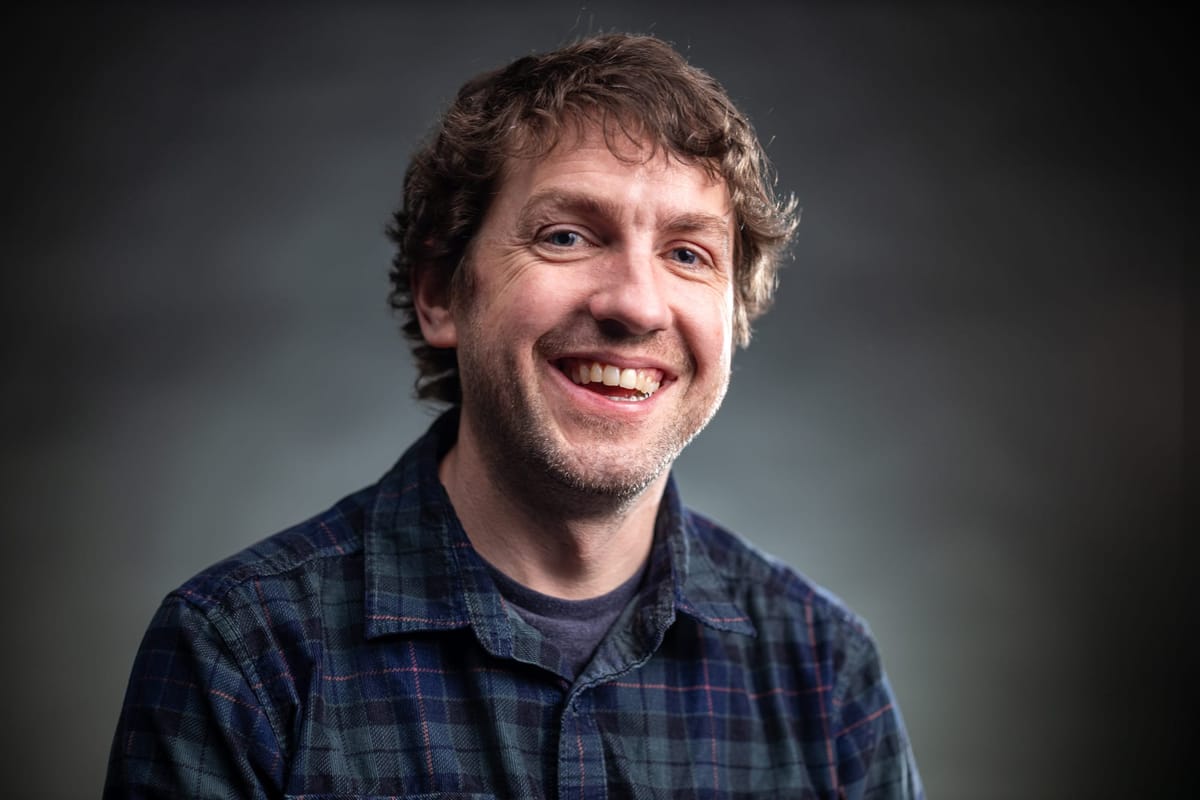
Chris Kamman and his Sky Lab Media House have been great friends to me from the beginning of my career. We did plenty of ski bumming back in the day but we've also made many films together. To me, Chris has always been the drone ninja - putting cameras on things that flew before DJI even existed.
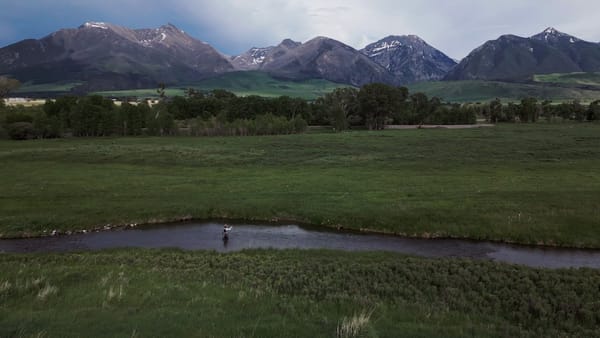
Chris is wildly imaginative and an incredible storyteller. Having been based in Big Sky, Montana, Chris has watched the world change around him. Here's a film he did capturing the essence of the place he loves and the changing times:
Being no stranger to change, I thought Chris would be a perfect interview about AI and our industry. This interview has been edited for clarity and length. The transcription will always be available to free members and, for a short time, I'm also offering the audio of our full conversation for free.
Interview
RC Cone: So I think you're like a lot of filmmakers, where you're: "I don't really like it, but I also need to know about it." What are some of the reasons why you are resistant or unsure?
Chris Kamman: I guess first thing why I'm kind of resistant to it is a little bit morally. Should I be using this? It's fake. It's kind of lowering my own quality by using this fake AI to replace the work I'm doing. So, yeah, it does feel a little bit wrong to me. Depends on what it's being used for. And I think I'm lucky to be working in an outdoor industry, where more storytelling is nonfiction that you can't recreate. And I'm hesitant to try to recreate that with AI because it would just bring down the authenticity of it. And the audience is going to know right away you're using AI. And you just can't use it in real storytelling. And a lot of it is, yeah, just ethics of using it, but also, I don't think AI can tell those stories. Especially if you're telling a good story, that content's not online yet. The person that you're telling the story about, or the event, or whatever it is, most of the time it's not going to be online. So AI isn't going to be able to find that information to make up either the outline for it or how this person looks or what that pow shot skiing looks like. I just don't think it's going to have the capability for a lot of it. And, yeah, a lot of it, it never will be able to because it won't have that information until the filmmaker makes that information available and finds the story and puts it online. There's nowhere for AI to reach out to and build that information from.
RC: But I also think part of this conversation of AI and visual storytelling and branding and filmmaking isn't-- at least right now, presently, it isn't like you have to use AI-generated images to make your edits. We're still presumably getting hired to go out and do our thing. So it's a little more of a nuanced conversation. In your everyday work, how are you using AI? And nowadays, it's almost impossible to say that I'm not. I am not avoiding it because transcriptions in Premiere Pro, right? That's the one button I push every single time an interview hits my timeline, right? And so I'm using AI to help cut up an interview. How else and what tools are you currently using?
Chris: In terms of editing and, on a computer in software, not too much. The only thing I can think of I've really used in the editing world is like - I forget what they call it - but I've used masking, like magnetic masking or generative masking, which can track a person or whatever it is and just instantly do it. And it saves so much time rather than doing that on your own, which is awesome because then it gives me more time to edit and make things right. Like, what a great tool. So that's huge. And then for just some storytelling things, I've used AI and ChatGPT to just kind of help me work out a story and the structure of it. And by no means is that, hey, write this story for me. But I can say, hey, I'm writing a film about this, this, this, with these three people. What do you think a good outline would be? And I'm looking and I'm like, oh, that's cool, but I don't like how it starts. Maybe I'd start it this way, move this. And it's like something to bounce ideas off of and brainstorm and see what they think and see it visually rather than just in your head. It feeds you something and you can say, I don't like that. Try it this way. Play with it and kind of come up with an answer you're happy with.
RC: Where do you think in your world-- let's talk about your world specifically. What do you think is next with AI and your business?
Chris: Yeah, it's tough. I think some of the tools in editing will be huge, like we were talking about, rotoscoping, masking, things like that. I have never used it, but I really love that, in Premiere, you can extend clips, generative extending something they call it. And I don't think I'd use it to make another 10 seconds of this, but if all of a sudden I only have four seconds of this and I really need it to be five, just extend that extra footstep he needs. I think that will be a huge skill that I can see myself using just to fit the edit. The other thing I've been thinking about looking into for more documentary stuff is motion graphics animations that are clearly motion graphics animations. Say, I need to show a map of something, and I can tell it to cut that out. Things that would have sadly taken an animator to do, and I would have had to hire them and pay a lot of money, I can now most likely make graphics that I'll need. Or even titles, things like that. I think I'll be able to get away with that.
Chris: And one of the gray areas for me still right now is - because I don't want to use AI, especially in documentary work of the actual images of the actual people. But there's one film I'm working on that there's almost no footage of it at all, video footage, and especially of the event, and it was a natural disaster, an earthquake that happened at night. How do you show that with voices about what happened at that time? It's in the dark, in the woods. How do you just recreate that beyond just a few dark trees and whatnot? And I've kind of been debating on how do I do that. And it might just be dust in the air in the trees lightly during a little flash. And not that that's the main shot, but using it more as like an ambiance shot to help tell the story when there is no footage or really no great way to recreate or show it. Or, it'd be really hard in Hollywood level animations to do. So I've thought about using it in small ways, just to get shots that I would never be able to get, but I don't want to use it as people or certain events, more just kind of background ambiance or quick little shots.
Follow Chris on Instagram.
Full Interview
Show Notes
- 01:19 - Why Chris is resistant to using AI.
- 05:45 - Chris as an audience member has mixed feelings about the use of Gen AI in a TV show he was watching.
- 9:02 - How Chris is saving time in his editing process with AI.
- 13:53 - Chris on what he's hearing from his clients and lists a couple examples where clients have specifically asked for it or where it was mission-critical to use AI.
- 20:29 - "I hope creativity becomes more valued because of it, because so many people will rely on AI."
- 21:33 - As an experienced drone pilot, where does he say AI going with aerial filmmaking?
- 25:11 - The possibilities for AI, archival footage and documentary filmmaking is crazy to think about.
- 30:32 - Worries about filmmaking folks losing their jobs.
Audio
Help get CXM off the ground - take 50% off an annual subscription. I'm working hard to bring you actionable intelligence at the intersection of AI and visual storytelling. Expires June 1, 2026.